The best episodes of Planet Earth
Ranked by viewer rating, highs first. Vote on a placement to back it or contest it.
- 01
Documentary series which celebrates our planet in all its glory, both its spectacular scenery and its captivating natural history.David Attenborough narrates the epic journey of a humpback whale and calf as they cross the richest seas that fringe our coasts. From tropical paradises, where the newborn calf takes his first faltering breaths, to the storm-ravaged icy polar seas, the whales' great feeding grounds, the programme reveals seas of great contrast and surprise.
- 02
David Attenborough narrates the final episode in the documentary series that shows our planet in all its glory. In this part, he looks at the largest of all habitats - the ocean. From the surface to the distantabyss, it encompasses 90 per cent of all the living space on our planet. Its depths plunge to over 11 kilometres down and it hides over 30,000 immense volcanic mountains, some far taller than Mount Everest. Much of this vastness is a virtual desert, but the creatures that do live here include the most bizarre, most powerful, and most charismatic of all; it is the home of the greatest animal ever to have existed, the blue whale, twice the size of the largest known dinosaurs.
- 03
Humans like to think that once they've climbed a mountain, they've somehow conquered it. But they can only ever be visitors to this alien, frozen world. This week, Planet Earth takes you on a tour of itsmightiest ranges, beginning with the birth of a mountain at one of the lowest places on earth, and ending at the summit of Everest. Unprecedented access brings you closer than ever before to the most awe-inspiring mountain landscapes on our planet, and the secretive, almost mythical creatures that inhabit them - the "real" mountaineers.In Ethiopia, Planet Earth ventures into the heart of a volcano to discover one of earth's rarest phenomena - a lava lake that's been erupting for over a hundred years. The same forces created Ethiopia's Simien Mountains, home to troops of gelada baboons nearly a thousand strong. In the Andes, a family of five puma struggle to survive the most unstable mountain weather on the planet.Experience the full force of an avalanche in the Rockies, where grizzlies survive the harsh winters deep inside the dangerous slopes. In summer, the bears climb the peaks in search of moths which they devour by the thousand.Descend into the icy core of a glacier in the Alps and emerge in Pakistan, at the snout of the largest glacier on earth. This realm of giant peaks is home to the highest land predator on the planet - the snow leopard. Astounding images of a female snow leopard hunting to feed her cub are a world first.Enter a mountain cave in China for the first ever glimpse of a wild giant panda mother nursing her week-old baby, and fly alongside demoiselle cranes as they attempt to cross the largest range on our planet, the Himalayas. The cranes, like all visitors to the hostile world of the high mountains, dare not linger.
- 04
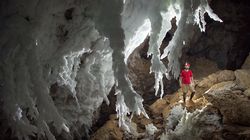
The Cave of Swallows in Mexico is a 400-metre vertical shaft. It's deep enough to engulf the Empire State Building, yet few people even know of its existence. Caves are earth's final frontier and this programmegoes where few have been before.Deer Cave in Borneo is a daytime retreat for five million bats; their droppings support an entire community of creatures. Shine a light on one massive pile of droppings and the whole place shimmers with millions of dung-eating insects.Caves also harbour some of the most remarkable and bizarre animals on earth; from cave swiftlets who build nests out of just saliva to the troglodytic animals that never see daylight or ever set foot on the surface. Troglodytes like the Texas cave salamander and Thailand's cave angel have neither eyes nor pigment, and the entire populations of both are found in just a couple of caves.From Lechuguilla Cave's astonishing six-metre-long crystals to the extraordinary snottites of Villa Luz, this documentary provides unprecedented access to the hidden world of caves.
- 05
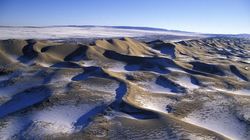
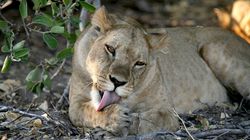
David Attenborough takes a look at deserts, which cover a third of the Earth's land surface. From space they appear lifeless but a closer look reveals a different picture.Deserts, in fact, are surprisingly varied; from Mongolia's Gobi desert where wild Bactrian camels have to eat snow in lieu of water, to the Atacama in Chile where guanacos survive by licking the dew off cactus spines.Changes are rare in deserts but they play a crucial part in their story; from Saharan sandstorms nearly a mile high to desert rivers that run for a single day; from the brief blooming of Death Valley in the USA, to a plague of desert locusts 40 miles wide and 100 miles long - two events that might occur once in 30 years.The highlight of the programme is a unique aerial voyage over the dunes and rocky escarpments of a Namibian desert. From this lofty viewpoint, we follow elephants on a desperate trek for food and - most amazingly of all - desert lions searching the wilderness for wandering bands of oryx.The programme unravels the secrets behind desert survival - and reveals the ephemeral nature of this stunning environment.
- 06
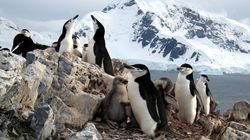
Although the frozen worlds of the Arctic and Antarctic experience the greatest seasonal extremes, it is the advance and retreat of the ice that is the real challenge to life. As the sea freezes, Antarctica doubles in size and all animals except for the emperor penguin flee.In the Arctic, the polar bear's ice world literally melts beneath its feet, forcing it to swim vast distances and take on one of the deadliest adversaries on the planet.
- 07
The great plains are the vast open spaces of our planet. These immense wilderness areas are seemingly empty. But any feeling of emptiness is an illusion - the plains of our planet support the greatestgatherings of wildlife on earth: two million gazelles on the Mongolian steppes, three million caribou in North America and one and a half million wildebeest in East Africa. Close on their heels come an array of plains predators including eagles, wolves and lions.At the heart of all that happens here is a single living thing - grass. Flooded, burnt, baked and frozen - grass is almost indestructible, able to survive from the baking savannahs of Africa to the frozen tundra of the Arctic, from the floodplains of India to the high altitude steppes of the Tibetan plateau. Together, these hugely productive grassland plains encompass a quarter of the land on earth and bear witness to some of the most dramatic wildlife stories on our planet.
- 08
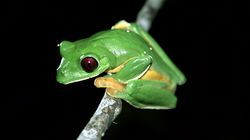
David Attenborough's natural history series.Tropical rainforests cover just three per cent of our planet, yet are home to a staggering 50 per cent of the world's species. They are the richest environments on earth but also the most competitive. Travelling through this enchanted world, we uncover the amazing strategies its inhabitants adopt in order to survive. Look out for the flying frog mating orgy and the sinister bodysnatching cordyceps fungi that eat their victims alive.
- 09
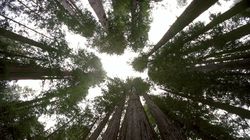
David Attenborough's documentary series which celebrates our planet in all its eclectic wonder. He reveals the greatest woodlands on earth, from the evergreen forests of the frozen north to the deciduous dryforests of the equator.The Taiga forest is a silent world of stunted conifers cloaked in snow and ice. The trees form a belt that circles the globe, broken only by ocean, and contains a third of all trees on Earth. Here, animals are scarce, with just a few charismatic loners like the wolverine and lynx.By contrast, the broadleaf forests of North America and Europe bustle with life. The most startling illustration happens just once every seventeen years, when the nymphs of the periodical cicada burst from the soil in the biggest insect emergence on the planet.In California, witness the cameras fly up the tallest trees on Earth: giant redwoods over 100 metres high. See General Sherman, a giant sequoia, ten times the size of a blue whale, and the largest living thing on the planet. Close by are bristlecone pines, so old they pre-date the pyramids and were already 2,500 years old when Jesus Christ was born.The baobab forests of Madagascar are the strangest of all. The bizarre upside-down trees store water in their swollen trunks and harbour strange wildlife, such as the tiny mouse lemur, the world's smallest primate.
- 10
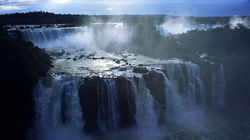
This edition takes an epic river journey following the descent of the planet's mightiest rivers from their mountain sources to the sea. Breathtaking river scenery is revealed by a revolutionary helicopter camera mount - from the world's highest and broadest waterfalls to the awe-inspiring spectacle of the 10,000-strong flocks of greater snow geese in flight.We witness underwater swimming monkeys; giant salamanders, at two metres the world's largest amphibian, on the hunt in a remote mountain river of Japan; and river dolphins in the Amazon, showing off lumps of rocks to win over a mate.New underwater worlds are discovered - we break the ice of the world's deepest lake, Baikal in Siberia, home to the only freshwater seal and bizarre giant amphipods. We dive into the Pantanal, the world's largest wetland patrolled by caiman and piranhas.We also encounter dramatic showdowns between gangs of Indian otters and mugger crocodiles; while in Africa the lightning ambushes of Nile crocodiles on wildebeest are filmed for the first time at ultra-high speed.
- 11
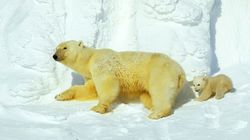
This episode journeys across the planet, from pole to pole, following the influence of the sun and discovering how its seasonal journey affects the lives of all who live on earth.As spring arrives in the Arctic, a mother polar bear emerges from her den with two tiny cubs. At the other end of the planet, winter arrives and emperor penguins are plunged into darkness for four months, enduring the coldest temperatures on the planet. From the Amur leopard in Russia to the birds of paradise in Papua New Guinea. No stone is left unturned to bring you the rarest and the weirdest creatures on earth.
Shows like Planet Earth
The closest matches on shared genres, ranked by match strength and popularity.
- 01Nature·AdventureThe best episodes of Naked and Afraid2013–present·Discovery
 Each week on Naked and Afraid, a new pair of complete and total strangers - one man and one woman - will find themselves stranded in and, quite literally, exposed to one of the world's most extreme weather environments.
 - 02Nature·Action·AdventureThe best episodes of Deadliest Catch2005–present·DiscoveryIt's the deadliest job on earth: crab fishing off the Alaskan coast on the icy Bering Sea.
- 03Nature·AdventureThe best episodes of Naked and Afraid: Uncensored2013–present·DiscoveryEach week on Naked and Afraid: Uncensored, a new pair of total strangers are faced with the ultimate survival challenge: survive for 21 days together with no clothes or supplies in some of the most dangerous…
- 04Nature·AdventureThe best episodes of Alone2015–present·History
 Alone places ten hardcore survivalists alone in the wilderness - no camera crew, no teams, no producers - on a single mission to stay alive.
 - 05Nature·HistoryThe best episodes of NOVA1974–present·PBS
 NOVA brings you stories from the frontlines of science and engineering, answering the big questions of today and tomorrow, from how our ancestors lived, to whether parallel universes exist, to how technology will…
 - 06Nature·Action·AdventureThe best episodes of Gold Rush2010–present·Discovery
 Gold Rush follows six men who, in the face of an economic meltdown, risk everything - their families, their dignity, and in some cases, their lives - to strike it rich mining for gold in the wilds of Alaska.