







The best episodes of NOVA
Ranked by viewer rating, highs first. Vote on a placement to back it or contest it.
- 01
In 1900, a storm blew a boatload of sponge divers off course and forced them to take shelter by the tiny Mediterranean island of Antikythera. Diving the next day, they discovered a 2,000 year-old Greek shipwreck. Among the ship's cargo they hauled up was an unimpressive green lump of corroded bronze. Rusted remnants of gear wheels could be seen on its surface, suggesting some kind of intricate mechanism. The first X-ray studies confirmed that idea, but how it worked and what it was for puzzled scientists for decades. Recently, hi-tech imaging has revealed the extraordinary truth: this unique clockwork machine was the world's first computer. An array of 30 intricate bronze gear wheels, originally housed in a shoebox-size wooden case, was designed to predict the dates of lunar and solar eclipses, track the Moon's subtle motions through the sky, and calculate the dates of significant events such as the Olympic Games. No device of comparable technological sophistication is known from anywhere in the world for at least another 1,000 years. So who was the genius inventor behind it? And what happened to the advanced astronomical and engineering knowledge of its makers? NOVA follows the ingenious sleuthing that finally decoded the truth behind the amazing ancient Greek computer.
- 02
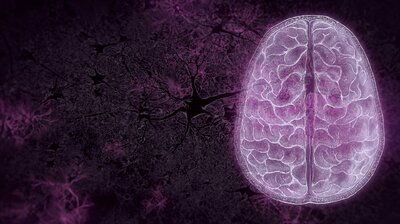
Your Brain: Perception Deception
Is what you see real? Join neuroscientist Heather Berlin on a quest to understand how your brain shapes your reality and why you can't always trust what you perceive. In the first hour of this two-part series, learn what the latest research shows about how your brain processes and shapes the world around you, and discover the surprising tricks and shortcuts your brain takes to help you survive.
- 03
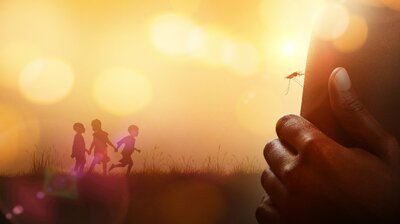
Malaria is one of humanity's oldest and most devastating plagues. In many parts of the world, it remains an ever-present scourge that sickens or kills millions of people each year. What if it could finally be defeated? Now, scientists may be on the verge of a breakthrough with a promising vaccine in the final stages of testing and approval. Follow researchers on a quest to deliver humankind from one of the world's deadliest diseases.
- 04
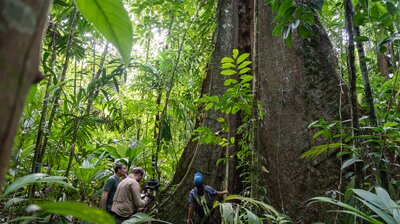
Can forests help cool the planet? Follow scientists working in spectacular forest landscapes in Costa Rica, Brazil, Australia, and beyond as they try to untangle complex networks of trees, fungi, and creatures large and small – all in a quest to tackle the twin threats of climate change and species extinction.
- 05
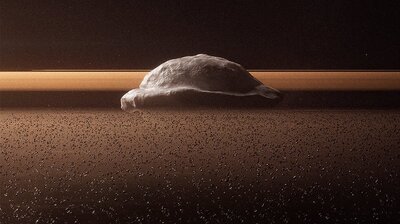
From a dwarf planet that looks like a deflated football to a tiny moon with cliffs taller than Mt. Everest to the spectacular rings of Saturn, discover how the effects of gravity produce the amazing variety of weird worlds in our solar system.
- 06
In September 2024, Hurricane Helene dumped more than 14 inches of rain on North Carolina, triggering flash floods and mudslides, causing over $50 billion of damage, and killing more than 100 people. A shocked nation wondered how the city that bore the brunt of the destruction – Asheville, at 2,000 feet above sea level and more than 250 miles inland – could have suffered such a fate. With eyewitness testimony, dramatic unseen videos, drone flyovers, and 3D animations, NOVA pieces together a moment-by-moment account of the Asheville disaster. And it looks to other recent flash floods – including the devastating Fourth of July 2025 floods in the Texas Hill Country, and catastrophic flooding in Valencia, Spain – for lessons that might help prevent the next disaster. Are these violent floods becoming more frequent and ferocious? And what can communities do to protect themselves in the future?
- 07
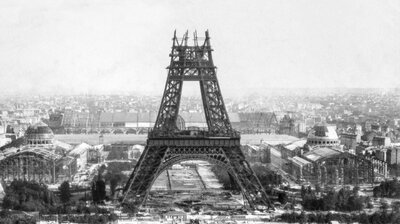
Explore the revolutionary engineering behind Paris's iconic landmark. Completed in just over two years for the 1889 World's Fair, the iron tower smashed the record for the tallest structure on Earth, ushering in a new age of global construction that reached for the skies. How did the engineers do it? Follow the innovations, successes, and failures that made one of the most famous buildings on the planet possible.
- 08
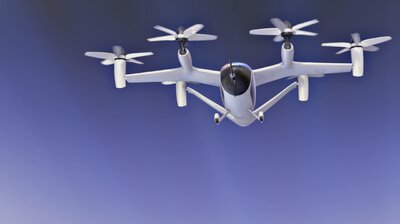
Thousands of years of human innovation have allowed us to shape the environment to improve lives. The consequences of our activities are not always benign – but there are solutions. From electrifying aviation, to building robots to protect threatened coral reefs, a new generation of engineers is finding creative solutions to some of our most critical environmental challenges.
- 09
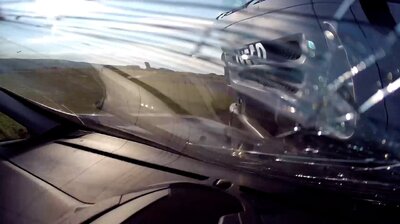
Ultimate Crash Test: Countdown
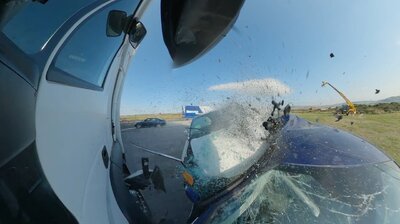
Surprisingly little is known about the behavior of cars and drivers in uncontrolled, real-world accidents, despite rigorous testing in laboratory-controlled crashes. Now, a first-of-its-kind experiment aims to discover what really happens in a multi-vehicle pileup and how cars and driving could be made safer.In the first episode of this two-part special, go behind the scenes as scientists make a series of high-stakes decisions to ensure the ambitious experiment goes off without a hitch. They only have one shot. The plan is for 8 drivers to drive 8 different cars by remote control at 70 mph down a hazardous straightaway. But how can they best represent real-world conditions to create a crash, especially when the drivers have no idea what's about to happen? How do they ensure that the remote drivers feel natural behind the wheel? And what is needed to fully capture every data-point possible? The intense preparation for the most ambitious crash test ever conducted culminates in the moment of truth as the cars barrel down an airport tarmac and collide in a massive, multi-vehicle pile-up.
- 10
Surprisingly little is known about the behavior of cars and drivers in uncontrolled, real-world accidents, despite rigorous testing in laboratory-controlled crashes. Now, a first-of-its-kind experiment aims to discover what really happens in a multi-vehicle pileup and how cars and driving could be made safer.In the second episode of this two-part special, forensic analysis is put to the test. Real-life crash scene investigations have very little data to work with, so are they accurate? And what can we learn about car safety when there is actual data to show exactly what happened? Follow scientists, engineers, and accident investigators as they analyze a treasure trove of data – more than they've ever been able to work with before. Interviews with drivers offer valuable clues into what they saw and how they reacted, and a LIDAR scan of the scene is stitched together into a digital version of the entire event that can be analyzed millisecond by millisecond. In this unprecedented look at a major multi-vehicle accident, discover insights about driver behavior and vehicle design that could save lives.
- 11
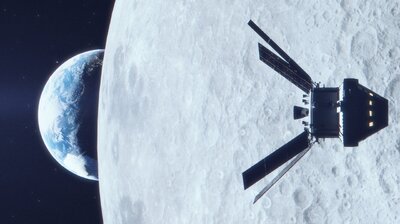
A half-century after American astronauts walked on the Moon, NASA and its international partners are taking the dream of Apollo a giant step further. In the coming years, the Artemis missions – named after Apollo's twin sister in Greek mythology – aim to bring astronauts back to the Moon and establish a lunar space station for scientific and commercial exploration. Follow the four members of the Artemis II crew as they embark on a perilous 10-day journey to orbit the Moon, venturing beyond Earth orbit for the first time since Apollo and farther into the Solar System than any humans have gone before. And get an inside look at the preparations needed to overcome the extreme engineering challenges of human-crewed spaceflight, all the way from launch to splashdown.Correction: This film previously stated that the four engines of the core stage generate 8.8 million pounds of thrust at liftoff. In fact, that much thrust is generated by the entire rocket including the boosters, not the core stage alone. The film has been updated accordingly.
- 12
Worshipped as a goddess, condemned as satanic, and spun into a stunning array of breeds, cats have long fascinated humans. But did we ever really domesticate them? And what can science tell us about our most mysterious companions?
- 13
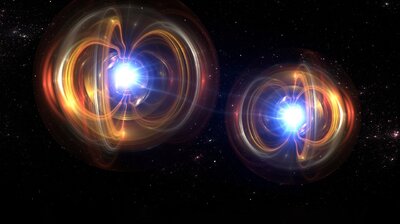
Decoding the Universe: Quantum
When we look at the world at the tiniest scales in the subatomic realm, things get weird – very weird. Welcome to the quantum universe, where particles can spin in two directions at once, observing something changes it, and something on one side of the galaxy can instantly affect something on the other, as if the space between them didn't exist. Buckle up for a wild ride through the discoveries that proved all of this to be true and paved the way for the digital technologies we enjoy today – and the powerful quantum sensors and computers of tomorrow.
- 14
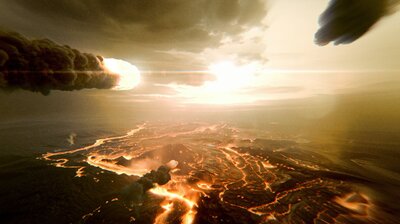
Imagine a time when Earth was a molten, volcanic wasteland, heavily bombarded by colossal asteroids. We've long feared these cosmic impacts as destroyers of life, but what if they were the key to our very existence? Explore a revolutionary theory suggesting that these violent collisions provided the essential ingredients – water, minerals, and energy – needed for life to ignite on our planet. Discover how scientists are unearthing evidence from lunar rocks and ancient impact craters, revealing that the very objects known for extinguishing life might have actually sparked it.
- 15
All around our solar system, volcanoes are powerful shapers of worlds. Next door on Mars is Olympus Mons, a giant volcanic mountain more than twice the size of Mt. Everest. And closer to the Sun, thousands of volcanoes produce the toxic atmosphere that keeps Venus boiling. Then there's Jupiter's moon Io, the most volcanically active world in the entire solar system, and Saturn's moon Enceladus, where clues in its watery eruptions hint at the possibility of life. Discover the explosive forces that molded each of these worlds – and what makes the volcanoes right here on Earth so special.
- 16
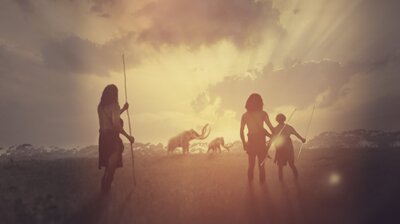
Journey back to when humans first ventured into the Americas, a world teeming with colossal megafauna and dramatic climate shifts. Witness their ingenious survival tactics against formidable predators, and uncover the mystery of ancient footprints in the desert of White Sands. See how these pioneers transformed from nomads to living in rooted communities, forever altering our world.
- 17
Operation Space Station - Science and Survival
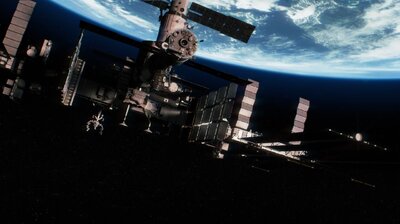
Imagine a place where more than 280 people have defied Earth's gravity, risking their lives to do science 250 miles above us. Here, on the International Space Station, unexpected challenges are a daily threat, from an astronaut's helmet filling with water on a spacewalk, to the entire station spinning out of control. Witness the ingenuity, courage, and international cooperation required to overcome these life-threatening emergencies. And discover how this unique orbiting laboratory continues to push the boundaries of science, uniting humanity in a shared pursuit of knowledge beyond our planet, even as its own incredible journey approaches its fiery conclusion.
- 18
Imagine a world where your furry best friend could tell you exactly what they're thinking. A growing number of dog owners claim this is already happening, thanks to innovative word buttons that seem to unlock a new realm of canine communication. But are these dogs truly understanding what we're saying — and talking back? Are they really thinking creatively, applying words in new contexts? Or is this just clever conditioning? To find out, scientists are conducting the largest animal communication study in history, analyzing millions of button presses from thousands of dogs worldwide. Witness astonishing moments that challenge our assumptions about animal intelligence, from dogs that seemingly engage in conversations to those who learn new words with incredible speed. Prepare to question everything you thought you knew about the minds of dogs and discover just how far their linguistic abilities might stretch.
- 19
Whether on social media or surfing the web, you probably share more personal data than you realize. That can pose a risk to your privacy – even your safety. But at the same time, big datasets could lead to huge advances in fields like medicine. Host Alok Patel leads a quest to understand what happens to all the data we're shedding and explores the latest efforts to maximize benefits – without compromising personal privacy.
- 20
Solar System: Wandering Worlds
The classic view of our solar system contains eight orderly planets, some with moons in neat orbits – but when we look closer, we discover a bunch of stuff missing from this simple, clockwork model. Wandering worlds that seem out of place, found in the gaps between and beyond the planets, offer clues that our cosmic neighborhood is far more dynamic than we once thought. From the meteorites that impact Earth, to a moon that orbits backwards, to an imposter lurking in the asteroid belt, these wandering worlds are rewriting what we know – and even how we think about – our solar system.
- 21
Around 300,000 years ago, Homo sapiens emerged in Africa – one of at least seven human species alive at the time. Now, we are the only remaining human line, and our impact on the planet is undeniable.In this stunningly cinematic five-part series, paleoanthropologist Ella Al-Shamahi takes viewers back in time to trace the surprising story of human origins. Remarkable new fossil evidence, modern DNA sequencing, and other cutting-edge scientific tools are shedding new light on the lives and journeys of long-vanished human species, and how our encounters with them helped make us who we are today. This evidence also reveals how our ancestors survived as they encountered new landscapes, developing the physical and cultural tools to help them survive – and eventually, with the rise of cities and complex civilizations, thrive – as no species has ever done.
- 22
How big is the universe? If it began with the Big Bang, will it also have an end? Is there life beyond our planet? Questions like these inspired the launch of Voyager I in 1977 and have driven innovative space research and exploration ever since. Trace the ground-breaking discoveries that have transformed our picture of the universe, from an age when we knew of no planets beyond our solar system, to today, when we have evidence of thousands and estimate trillions more. And follow the teams trying to solve two of the biggest mysteries in cosmology today: What are dark matter and dark energy?
- 23
Contrary to popular belief, dinosaurs never went extinct. They're still alive among us – in the form of birds! Birds are the only dinosaurs that survived the cataclysmic mass extinction caused by an asteroid the size of Mt. Everest crashing into Earth about 66 million years ago. The big question is: How? How did birds manage to not only live through the apocalypse, but also go on to diversify and populate every corner of our planet? Now, rare fossil discoveries are revealing the secrets of bird evolution going back more than 100 million years, telling the story of how some resilient feathered dinos persevered and transformed into the vast array of colorful bird species that fill our skies today.
- 24
From the time humans arose in Africa, they have been on the move – but one species, Homo sapiens, has journeyed farther than any other. Follow in our ancestors' footsteps as they travel the globe, and meet the mysterious hobbit-like humans they may have encountered along the way. How did Homo sapiens manage to thrive across the planet? And how did our drive to explore shape us and the world as we know it today?
- 25
On a remote hillside in modern-day Turkey sits Gpbekli Tepe, the oldest temple on Earth. For centuries, archaeologists believed it was a religious center built by nomadic hunter-gatherers before the rise of civilization. But groundbreaking new evidence reveals that a sophisticated community of settled hunter-gatherers, not nomads, lived here year-round for centuries. This startling discovery could be the missing link in humanity's momentous transition from hunting to farming. Follow experts as they use new digs and shattered skulls to piece together a captivating story that could forever change our understanding of the roots of civilization.





Shows like NOVA
The closest matches on shared genres, ranked by match strength and popularity.
- 01Nature·History·MysteryThe best episodes of Cosmos1980–2020·National GeographicHosted by renowned astrophysicist Neil deGrasse Tyson, Cosmos will explore how we discovered the laws of nature and found our coordinates in space and time.
- 02Nature·HistoryThe best episodes of Prehistoric Planet2022
 Experience the wonders of our world like never before in this epic docuseries from Jon Favreau and the producers of Planet Earth.
 - 03Nature·History·ActionThe best episodes of In the Eye of the Storm2024–present·Discovery
 In the Eye of the Storm Megastorms like 2021's Hurricane Ida and the 2023 Maui Wildfires were captured by onlookers who found themselves in the wrong place at the right time and boldly held up their camera phones to…
 - 04Nature·History·MysteryThe best episodes of What on Earth?2015·ScienceWhat on Earth? is a documentary series using satellite images of strange geological occurrences and man-made structures on Earth to examine such matters as the planet's extreme locations, phenomena and species.
- 05Nature·History·MysteryThe best episodes of The Sky at Night1957–present·BBC FourOur team of astronomers tell us what's on view in the night sky.
- 06Nature·HistoryThe best episodes of Our Universe2022–2022
 Witness the remarkable story of our universe over billions of years and its inextricable link to life on Earth in this sweeping documentary series.