






The worst episodes of NOVA
Ranked by viewer rating, lows first. Vote on a placement to back it or contest it.
- 01
Learn how much science can tell us about a brain at risk for violence.
- 02
From crunchy cricket chips to nutty black soldier fly grubs, "Edible Insects" leaps across cultural and culinary boundaries to explore the insect food industry and how it could benefit our health and our warming planet. From Thailand to Texas, cricket farmers show how the tiny critters stack up as an environmentally friendly alternative to beef protein. In fact, as one of the show's many gastro-surprises reveals, insects make animal protein vastly more efficiently than cows and, pound for pound, deliver far better nutritional value than the finest steak. Unappealing as an insect milkshake might sound, it may promote the growth of healthy gut bacteria that could help prevent inflammation and cancer. But what about the "ick" factor? NOVA invites a panel of volunteers to sample an invitingly prepared tasting menu of roasted crickets, ants, mealworms, and chipotle-flavored grasshoppers prepared by a New York chef, and not surprisingly, some of the diners have trouble concealing their squeamishness. Yet all the evidence adds up to the idea that our aversion to insects is mostly a matter of attitude and cultural conditioning. So will your kitchen table soon host its very own savory insect feast?
- 03
Technology to capture the 2 terroists in Boston.
- 04
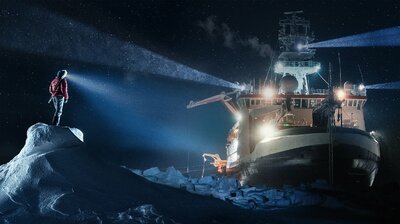
Join scientists on the most ambitious Arctic research expedition of all time. Experts from over twenty different nations join the voyage of the massive Polarstern icebreaker as it's gripped by the polar ice and drifts for nearly an entire year. From this unique research station, they can make long-term observations and perform experiments in unprecedented detail. Facing hungry polar bears, perilous sea ice cracks, and brutal cold, the team strives to understand the forces changing the region—and the world—forever.
- 05
Discover what happens in the mind of a terrorist and how we may intercede to stop the next attack.
- 06
Examine the science behind vaccinations, the return of preventable diseases and the risks of opting out.
- 07
Experts zero in on what separates humans from our closest living relatives.
- 08
Join the 'Car Talk' guys as they hit the road in search of a new breed of clean, fuel-efficient vehicles.
- 09
Learn about the revolutionary bouncing bomb and the bombers who destroyed two gigantic dams in Germany's industrial heartland during WWII.
- 10
Return to Ground Zero to witness the final chapter in an epic story of engineering and innovation.
- 11
For centuries, the Lithuanian city of Vilna was one of the most important Jewish centers in the world, earning the title "Jerusalem of the North" until World War II, when the Nazis murdered about 95% of its Jewish population and reduced its synagogues and cultural institutions to ruins. The Soviets finished the job, paving over the remnants of Vilna's famous Great Synagogue so thoroughly that few today know it ever existed. Now, an international team of archaeologists is trying to rediscover this forgotten world, excavating the remains of its Great Synagogue and searching for proof of one of Vilna's greatest secrets: a lost escape tunnel dug by Jewish prisoners inside a horrific Nazi execution site. Archaeologists discover the tunnel near Vilnius, Lithuania, which served as an escape route for Jews fleeing the Nazis during World War II.
- 12
It's hard not to notice: our weather is changing. From longer, hotter heat waves, to more intense rainstorms, to megafires and multi-year droughts, the U.S. is experiencing the full range of impacts from a changing global climate. At the same time, many on the front lines are fighting back – innovating solutions, marshaling ancient wisdom, and developing visionary ideas. The lessons they're learning today can help all of us adapt in the years ahead, as the planet gets warmer and our weather gets more extreme.
- 13
What is the strongest material in the world? Is it steel, Kevlar, carbon nanotubes, or something entirely new? NOVA kicks off the four-part series "Making Stuff" with a quest for the world's strongest substances. Host David Pogue takes a look at what defines strength, examining everything from steel cables to mollusk shells to a toucan's beak. Pogue travels from the deck of a U.S. naval aircraft carrier to a demolition derby to the country's top research labs to check in with experts who are re-engineering what nature has given us to create the next generation of strong stuff.
- 14
Follow investigators' efforts to determine what really happened to Lindbergh's baby - and why.
- 15
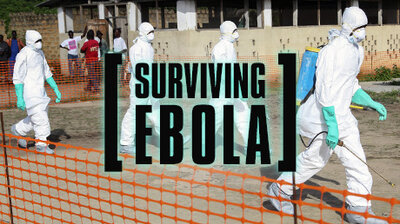
In December, 2013, in a small village in West Africa, a young boy died from the dreaded disease, Ebola. Over the next nine months the virulent killer would claim more victims than all previous Ebola epidemics put together. And for the first time, the disease escaped the isolated, rural villages where it had first appeared and traveled in infected patients by air to densely populated cities in several African countries. As the epidemic threatens to spiral out of control, NOVA reports from the hot zone, where courageous medical teams struggle to cope with a flood of victims, and in labs where scientists are racing to test vaccines and find a cure. "Surviving Ebola" includes chilling first-hand interviews of what it's like to catch—and—survive this terrible affliction.
- 16
In 1986, in the heart of Ukraine, the Chernobyl nuclear reactor exploded, releasing 400 times more radiation than the Hiroshima Bomb. It was the world's worst nuclear disaster. Thirty workers died, 50,000 people fled the nearest city, and radioactive fallout made an area larger than Long Island a no-go zone. Hastily, a so-called "sarcophagus" was built to contain the radioactive materials that lingered at the site after the explosion. But 30 years later, the sarcophagus is crumbling, and another disaster at Chernobyl looms. Now, an international team of engineers is racing the clock to assemble one of the most ambitious superstructures ever built—an extraordinary 40,000 ton, $1.5 billion dome to encase the crumbling remains of the Chernobyl nuclear reactor. Battling arctic winter weather—and lethal radiation—this is the inside story of the epic race to build Chernobyl's MegaTomb.
- 17
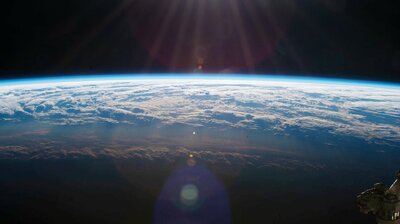
As global temperatures continue to rise, scientists are wondering if we need solutions beyond reducing emissions. Enter geoengineering. From sucking carbon straight out of the air to physically blocking out sunlight, the options may seem far-fetched. But as time runs out on conventional solutions to climate change, scientists are asking the hard questions: Can geoengineering really work? How much would it cost? And what are the risks of engineering Earth's climate?
- 18
Picture a Scientist / Search Engine Breakdown
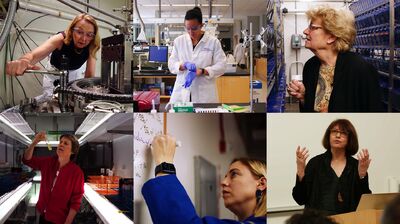
Picture a Scientist: Women make up less than a quarter of STEM professionals in the United States, and numbers are even lower for women of color. But there is a growing group of researchers who are writing a new chapter for women scientists, exposing longstanding discrimination, and leading the way in making science more inclusive. A biologist, a chemist, and a geologist lead viewers on a journey through their own experiences in the sciences, ranging from outright harassment to years of subtle slights. Along the way, from cramped laboratories to spectacular field stations, scientific visionaries, including social scientists, neuroscientists, and psychologists, provide new perspectives on how to make science itself more diverse, equitable, and open to all.Search Engine Breakdown: Why does a widely used internet search engine deliver results that can be blatantly racist and sexist? Two leading information researchers, Safiya Noble, PH.D. and Latanya Sweeney, PH.D., investigate their discoveries of hidden biases in the search technology we rely on every day, involving pornographic images and ads implying criminal behavior triggered by simple search queries. Both researchers share common concerns about how everyday online searches can reinforce damaging stereotypes and explore how technology can be made more equitable.
- 19
The U.S. recently set an ambitious climate change goal: zero carbon emissions by 2050. And to achieve that, slash emissions in half by 2030. Is it possible? And what kind of technology would it take? Meet scientists and engineers who are convinced we can achieve carbon zero in time to avoid the biggest impacts of climate change.
- 20
In 2005, filmmaker Jason DaSilva was diagnosed with primary progressive multiple sclerosis, a rare type of MS with no known cure that inflicts a host of progressively debilitating symptoms. In this moving personal film, DaSilva looks back on the challenges he's faced, delves into the science behind MS, and investigates the potential risk factors that may–or may not–have contributed to his rare diagnosis. Refusing to be labeled a "tragic" case, he continues to advocate for people with disabilities and pursue his career as an artist and filmmaker.
- 21
Critical Condition: Health in Black America
Black Americans are nearly twice as likely to have high blood pressure, diabetes, and heart disease than White Americans, and their life expectancy is about five years shorter. Why? In this special feature-length documentary, Oscar-nominated filmmaker Stanley Nelson investigates the dramatic health disparities in the U.S., even as scientists confirm that there are no meaningful genetic differences between races. From the deep history of pseudoscientific beliefs about race that still permeate modern medicine, to the latest research on how experiencing discrimination can directly damage the body's DNA and biology, "Critical Condition" reveals the factors behind the health crisis facing Black Americans.
- 22
From Bitcoin to NFTs, crypto is making headlines. But what exactly is it, and how does it work? Experts go beyond the hype and skepticism to unravel crypto's social and technological underpinnings – exploring how it came to be and why this new technology may change more than just money.
- 23
Top-secret documents rewrite the history of the famous satellite and the early space race.
- 24
On June 1, 2009, Flight AF447, an Air France Airbus A330 flying from Rio de Janeiro to Paris, disappeared over the Atlantic Ocean with the loss of all 228 lives. How could a state-of-the-art airliner with elaborate electronic safety and navigation features and a faultless safety record simply fall out of the sky? NOVA assembles a team of seasoned pilots, engineers, and safety experts to examine the evidence that emerged in the weeks following this horrific disaster. What led Flight 447's crew to fly straight into a towering thunderstorm? With expert testimony, satellite weather images, and messages transmitted by the doomed plane's computer system, NOVA pieces together the fatal chain of events.
- 25
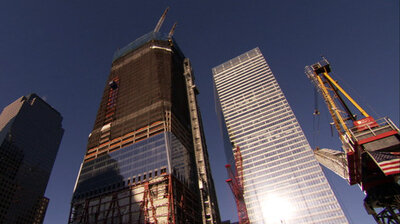
NOVA presents an epic story of engineering, innovation, and the perseverance of the human spirit. With extraordinary access granted by The Port Authority of New York and New Jersey, "Engineering Ground Zero" follows the five-year construction of One World Trade Center (1 WTC) and the National September 11 Memorial & Museum.









Shows like NOVA
The closest matches on shared genres, ranked by match strength and popularity.
- 01Nature·History·MysteryThe worst episodes of Cosmos1980–2020·National GeographicHosted by renowned astrophysicist Neil deGrasse Tyson, Cosmos will explore how we discovered the laws of nature and found our coordinates in space and time.
- 02Nature·HistoryThe worst episodes of Prehistoric Planet2022
 Experience the wonders of our world like never before in this epic docuseries from Jon Favreau and the producers of Planet Earth.
 - 03Nature·History·ActionThe worst episodes of In the Eye of the Storm2024–present·Discovery
 In the Eye of the Storm Megastorms like 2021's Hurricane Ida and the 2023 Maui Wildfires were captured by onlookers who found themselves in the wrong place at the right time and boldly held up their camera phones to…
 - 04Nature·History·MysteryThe worst episodes of What on Earth?2015·ScienceWhat on Earth? is a documentary series using satellite images of strange geological occurrences and man-made structures on Earth to examine such matters as the planet's extreme locations, phenomena and species.
- 05Nature·History·MysteryThe worst episodes of The Sky at Night1957–present·BBC FourOur team of astronomers tell us what's on view in the night sky.
- 06Nature·HistoryThe worst episodes of Our Universe2022–2022
 Witness the remarkable story of our universe over billions of years and its inextricable link to life on Earth in this sweeping documentary series.