










The essential episodes of American Experience
Watch these 15 in order and you've got American Experience — each pick states its reason.
- 01
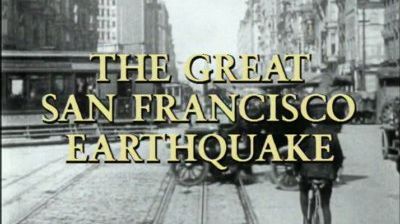
The Great San Francisco Earthquake
From Enrico Caruso to the ordinary San Franciscan, this film presents vivid memories of those trapped in the terrifying event of 1906. Four hundred eighty square blocks were reduced to rubble; thousands were killed, tens of thousands left homeless. Then the heroic struggle to rebuild a city from the ashes began.
- 02
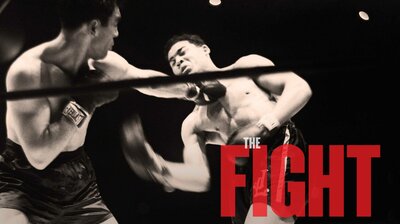
June 22, 1938. Though the Great Depression rages and war looms, the eyes of the world are on Yankee Stadium in New York where, beneath threatening skies, German Max Schmeling and American Joe Louis are squaring off for the heavyweight championship of the world. More than 90,000 people crowd the stadium to watch the encounter, and countless millions more — the largest radio audience in history — listen in around the world to what one commentator would call "two minutes and four seconds of murder."The pressure on each fighter is enormous. Joe Louis is not only fighting for the honor of the country; he is quite literally holding the hopes of all of black America in his fists. For Max Schmeling, the fight will be a demonstration of Hitler's racial theories, and should the German lose, many fear for what could happen to him. Theirs was a rivalry that would draw in two nations inching closer to war and take the measure of two men who had been fighting all their lives.The Fight explores the famous 1938 heavyweight bout and finds two men who, in the shadow of war, became reluctant symbols of equality and supremacy, democracy and fascism.
- 03
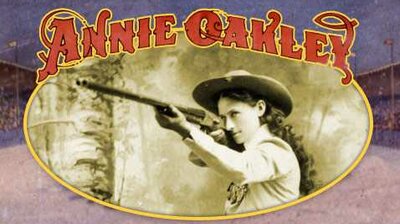
She was the toast of Victorian London, New York, and Paris. She was "adopted" by Indian chief Sitting Bull, charmed the Prince of Prussia, and entertained the likes of Oscar Wilde and Queen Victoria. Annie Oakley excelled in a man's world by doing what she loved and won fame and fortune as the little lady from Ohio who never missed a shot.
- 04
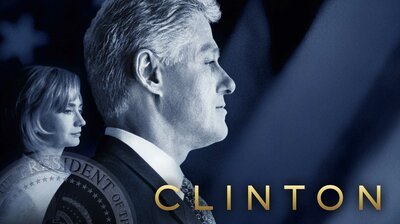
The biography of a president who rose from a broken childhood in Arkansas to become one of the most successful politicians in modern American history and one of the most complex and conflicted characters to ever stride across the public stage.
- 05
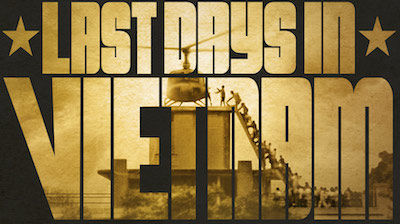
During the chaotic final days of the Vietnam War, North Vietnamese forces closed in on Saigon as South Vietnamese resistance quickly crumbled. With the specter of a Communist victory looming and only a skeleton crew of diplomats and military operatives still in the country, the United States prepared to withdraw. As they began to realize the likely imprisonment and possible death of their South Vietnamese allies, American diplomats and soldiers confronted a moral quandary: obey White House orders to evacuate only U.S. citizens, or risk being charged with treason and save the lives of as many South Vietnamese citizens as they can. With time running out and the city under fire, an unlikely group of heroes emerged as Americans and South Vietnamese took matters into their own hands.
- 06
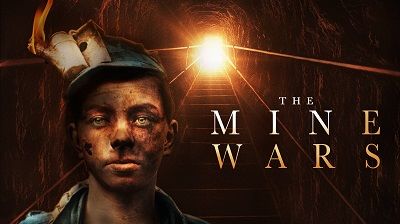
Go inside the bitter battle to unionize coal miners at the dawn of the 20th century. Coal was the fuel that powered the nation. Yet few Americans thought much about the men who blasted the black rock from underground and hauled it to the surface. The Mine Wars tells the overlooked story of the miners in the mountains of southern West Virginia — native mountaineers, African American migrants, and European immigrants — who came together in a protracted struggle for their rights. Decades of violence, strikes, assassinations, and marches accompanied their attempts to form a union, culminating in the Battle of Blair Mountain in 1921, the largest armed insurrection since the Civil War. The West Virginia mine wars raised profound questions about what freedom and democracy meant to working people in an industrial society.
- 07
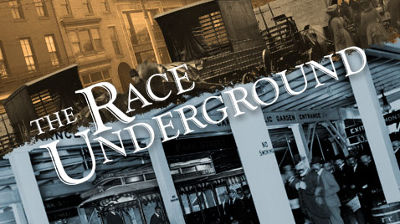
In the late 19th century, as America's teeming cities grew increasingly congested, the time had come to replace the nostalgic horse-drawn trolleys with a faster, cleaner, safer, and more efficient form of transportation. Ultimately, it was Boston — a city of so many firsts — that overcame a litany of engineering challenges, the greed-driven interests of businessmen, and the great fears of its citizenry to construct America's first subway. Based in part on Doug Most's acclaimed book of the same name, The Race Underground tells the dramatic story of an invention that changed the lives of millions.
- 08
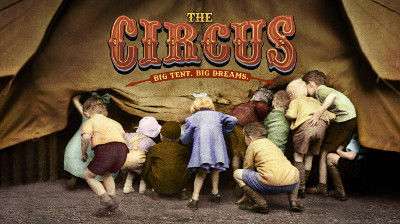
This four-hour mini-series tells the story of one of the most popular and influential forms of entertainment in American history. Through the intertwined stories of several of the most innovative and influential impresarios of the late nineteenth century, this series reveals the circus was a uniquely American entertainment created by a rapidly expanding and industrializing nation; that it embraced and was made possible by Western imperialism; that its history was shaped by a tension between its unconventional entertainments and prevailing standards of respectability; and that its promise for ordinary people was the possibility for personal reinvention. For many Americans, the circus embodied the improbable and the impossible, the exotic and the spectacular. Drawing upon a vast and richly visual archive and featuring a host of performers, historians and aficionados, The Circus follows the rise and fall of the gigantic, traveling tented railroad circus and brings to life an era when Circus Day would shut down a town and its stars were among the most famous people in the country. It explores the colorful history of this popular, influential and distinctly American form of entertainment, from the first one-ring show at the end of the 18th century to 1956, when the Ringling Bros. and Barnum & Bailey big top was pulled down for the last time.
- 09
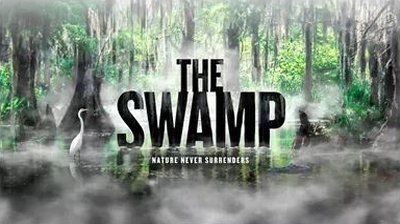
The Swamp tells the dramatic story of humanity's attempts to conquer the Florida Everglades, one of nature's most mysterious and unique ecosystems. Home to a profusion of plants and animals found nowhere else on the continent, the Everglades was an immense watershed covering the southern half of the Florida peninsula. In the 19th century, however, most Americans believed swamps were filled with diseases and noxious reptiles and saw them as obstacles to the nation's progress. The idea of draining the Everglades became the goal of many entrepreneurs, politicians and salesmen who saw great potential in turning the massive wetland into a profitable enterprise. Altering the landscape of the Everglades unleashed a torrent of unintended consequences, from catastrophic floods to brutal droughts. Told through the lives of a handful of colorful and resolute characters, from hucksters to politicians to unlikely activists, The Swamp explores the repeated efforts to transform what was seen as a vast and useless wasteland into an agricultural and urban paradise, ultimately leading to a passionate campaign to preserve America's greatest wetland.
- 10
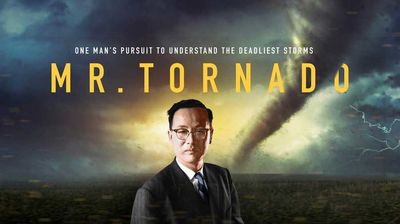
The Super Outbreak of 1974 was the most intense tornado outbreak on record, tearing a vicious path of destruction across thirteen states, generating 148 tornadoes from Alabama to Ontario, damaging thousands of homes, and killing more than 300 people. Meteorologist Tetsuya Theodore "Ted" Fujita spent ten months studying the outbreak's aftermath in the most extensive aerial tornado study ever conducted and through detailed mapping and leaps of scientific imagination, made a series of meteorological breakthroughs.His discovery of "microbursts," sudden high wind patterns that could cause airplanes to drop from the sky without warning, transformed aviation safety and saved untold numbers of lives. Mr. Tornado is the remarkable story of the man whose groundbreaking work in research and applied science saved thousands of lives and helped Americans prepare for and respond to dangerous weather phenomena.
- 11
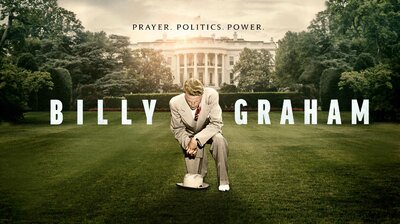
Billy Graham explores the life and career of one of the best-known and most influential Christian leaders of the 20th century. From modest beginnings on a North Carolina farm, Graham rose to prominence with a fiery preaching style, movie-star good looks, and effortless charm. His early fundamentalist sermons harnessed the apocalyptic anxieties of a post-atomic world, exhorting audiences to adopt the only possible solution: devoting one's life to Christ. Graham became an international celebrity by age 30 who built a media empire, preached to millions worldwide, and had the ear of tycoons, royalty, and presidents. At age 99, he died a national icon, estimated to have preached in person to 210 million people. Billy Graham examines the evangelist's extraordinary influence on American politics and culture, interweaving the voices of historians, scholars, witnesses, family, and Graham himself to create a kaleidoscopic portrait of a singular figure in the American experience.
- 12
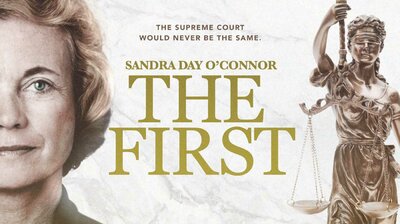
Sandra Day O'Connor: The First
When Ronald Reagan nominated Sandra Day O'Connor as the Supreme Court's first female justice in 1981, the announcement dominated the news. Time Magazine's cover proclaimed "Justice At Last," and she received unanimous Senate approval. Born in 1930 in El Paso, Texas, O'Connor grew up on a cattle ranch in Arizona in an era when women were expected to become homemakers. After graduating near the top of her class at Stanford Law School, she could not convince a single law firm to interview her, so she turned to volunteer work and public service. A Republican, she served two terms in the Arizona state senate, then became a judge on the state court of appeals. During her 25 years on the Supreme Court, O'Connor was the critical swing vote on cases involving some of the 20th century's most controversial issues, including race, gender, and reproductive rights — and she was the tiebreaker on Bush v. Gore. Forty years after her confirmation, this biography recounts the life of a pioneering woman who both reflected and shaped an era.
- 13
American Coup: Wilmington 1898
American Coup: Wilmington 1898 tells the little-known story of a deadly race massacre and carefully orchestrated insurrection in North Carolina's largest city in 1898 — the only coup d'état in the history of the US. Stoking fears of "Negro Rule," self-described white supremacists used intimidation and violence to destroy Black political and economic power and overthrow Wilmington's democratically-elected, multi-racial government. Black residents were murdered and thousands were banished. The story of what happened in Wilmington was suppressed for decades until descendants and scholars began to investigate. Today, many of those descendants — Black and white — seek the truth about this intentionally buried history.
- 14
Clearing the Air: The War on Smog
In July 1943, dark, smoky clouds suddenly descended over Los Angeles, causing residents to complain of burning eyes, nausea, and difficulty breathing. People couldn't see across the street and visibility was so bad that cars crashed. With World War II raging, many feared a chemical attack by the Japanese, but it soon became evident that no foreign enemy was to blame. The waves of pollution called "smog" — a combination of "smoke" and "fog" — continued and the cause remained a mystery. It was the beginning of an epic struggle for clean air involving years of scientific investigation and civic pressure, bringing together people across ideological divides in a remarkable example of bipartisanship. Their work would lead to the creation of the Environmental Protection Agency and the Clean Air Act, which have had an enduring effect on the quality of air Americans breathe.
- 15
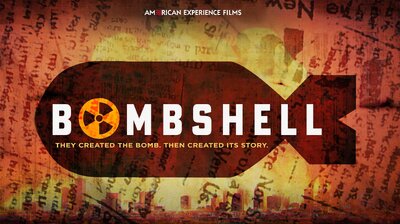
On August 6, 1945, a revolutionary new weapon destroyed Hiroshima, a Japanese city of 300,000 inhabitants. Three days later, a second atomic bomb was dropped on Nagasaki. America's secret super-weapon was lauded for bringing about victory in the Pacific and ending World War II. President Truman's official announcement included half-truths that shaped the government's official narrative: "Sixteen hours ago, an American airplane dropped one bomb on Hiroshima, an important Japanese army base." In fact, the bomb was aimed at Hiroshima's city center for maximum psychological effect; the army base on its outskirts escaped much damage.Eighty years after the devastating atomic bombings that ushered in the nuclear age, Bombshell explores how the U.S. government manipulated the narrative about the impact of the atomic bombings of the Japanese cities Hiroshima and Nagasaki. Through propaganda, censorship, and the co-opting of the press, the government presented a benevolent picture of atomic power, minimizing the horrific human toll. Bombshell sheds light on the efforts of a group of intrepid reporters to let the world know the truth.


Shows like American Experience
The closest matches on shared genres, ranked by match strength and popularity.
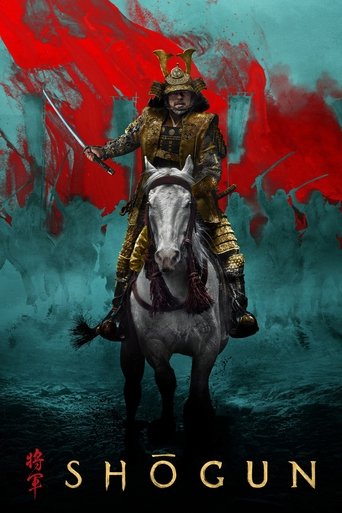
- 01History·Drama·AdventureThe essential episodes of Shōgun2024–present
 Shōgun is set in Japan in the year 1600 at the dawn of a century-defining civil war.
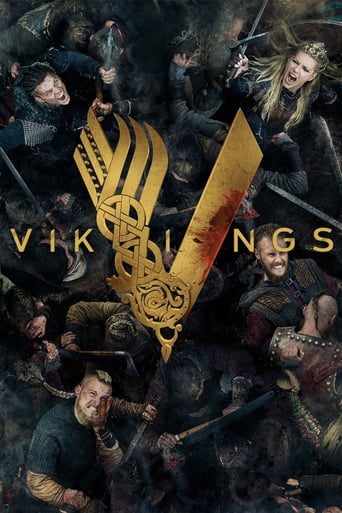
 - 02History·Drama·ActionThe essential episodes of Vikings2013–2021·History
 Vikings transports us to the brutal and mysterious world of Ragnar Lothbrok, a Viking warrior and farmer who yearns to explore - and raid - the distant shores across the ocean.
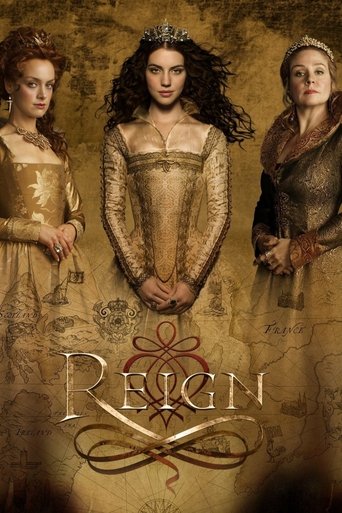
 - 03History·Drama·RomanceThe essential episodes of Reign2013–2017·The CW
 Hidden between the lines of the history books is the story of Mary Stuart, the young woman the world would come to know as Mary, Queen of Scots.
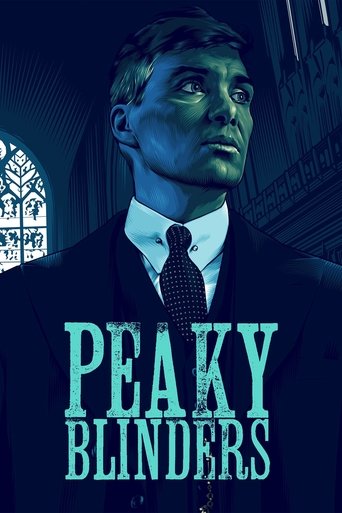
 - 04History·Drama·CrimeThe essential episodes of Peaky Blinders2013–present·BBC OneAn epic gangster drama set in the lawless streets of 1920s Birmingham.
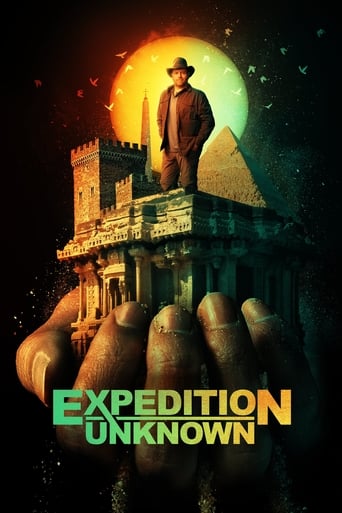
- 05History·Adventure·MysteryThe essential episodes of Expedition Unknown2015–present·Discovery
 In the hit series Expedition Unknown, Travel Channel's witty explorer Josh Gates seeks answers to some of the world's most captivating unsolved stories and legends.
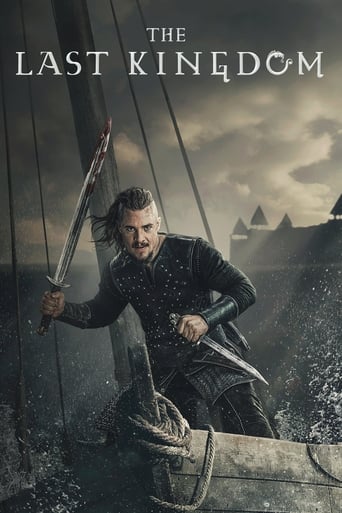
 - 06History·Drama·ActionThe essential episodes of The Last Kingdom2015–2023The Last Kingdom is a show of heroic deeds and epic battles but with a thematic depth that embraces politics, religion, warfare, courage, love, loyalty and our universal search for identity.
Keep going
Episodes, ratings, cast and the full series dossier.
ChartsBest episodesThe highest-rated hours of American Experience, ranked.
ChartsRatings graphEvery rated episode of American Experience on one chart.
StreamWhere to watchEvery service carrying American Experience, region by region.