








The worst episodes of American Experience
Ranked by viewer rating, lows first. Vote on a placement to back it or contest it.
- 01
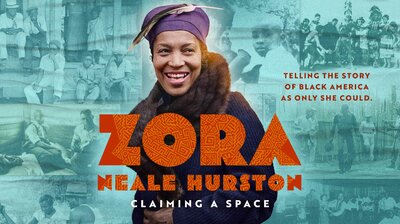
Zora Neale Hurston: Claiming a Space
Raised in the small all-Black Florida town of Eatonville, Zora Neale Hurston studied at Howard University before arriving in New York in 1925. She would soon become a key figure of the Harlem Renaissance, best remembered for her novel, Their Eyes Were Watching God. But even as she gained renown in the Harlem literary circles, Hurston was also discovering anthropology at Barnard College with the renowned Franz Boas. She would make several trips to the American South and the Caribbean, documenting the lives of rural Black people and collecting their stories. She studied her own people, an unusual practice at the time, and during her lifetime, became known as the foremost authority on Black folklore. This episode is an in-depth biography of the influential author whose groundbreaking anthropological work would challenge assumptions about race, gender, and cultural superiority that had long defined the field in the 19th century.
- 02
The American Diplomat explores the lives and legacies of three African American ambassadors — Edward Dudley, Terence Todman, and Carl Rowan — who pushed past historical and institutional racial barriers to reach high-ranking appointments in the Truman, Eisenhower, and Kennedy administrations. At the height of the civil rights movement in the United States, the three men were asked to represent the best of American ideals abroad while facing discrimination at home. Oft reputed as "pale, male and Yale," the U.S. State Department fiercely maintained and cultivated the Foreign Service's elitist character and was one of the last federal agencies to desegregate. Through rare archival footage, in-depth oral histories, and interviews with family members, colleagues, and diplomats, the film paints a portrait of three men who left a lasting impact on the content and character of the Foreign Service and changed American diplomacy forever. Building lives of opportunity and influence, they advocated for a nation that did not always advocate for them.
- 03
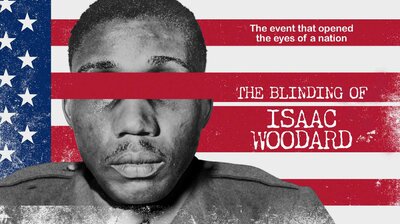
In 1946, Isaac Woodard, a Black army sergeant on his way home to South Carolina after serving in WWII, was pulled from a bus for arguing with the driver. The local chief of police savagely beat him, leaving him unconscious and permanently blind. The shocking incident made national headlines and, when the police chief was acquitted by an all-white jury, the blatant injustice would change the course of American history. Based on Richard Gergel's book Unexampled Courage, the film details how the crime led to the racial awakening of President Harry Truman, who desegregated federal offices and the military two years later. The event also ultimately set the stage for the Supreme Court's landmark 1954 Brown v. Board of Education decision, which finally outlawed segregation in public schools and jumpstarted the modern civil rights movement.
- 04
Riveted: The History of Jeans reveals the fascinating and surprising story of this iconic American garment. At any given moment, half the people on the planet are wearing them. They have become a staple of clothing the world over, worn by everyone from presidents and supermodels to farmers and artists. More than just an item of apparel, America's tangled past is woven into the indigo blue fabric. From its roots in slavery to its connection to the Wild West, youth culture, the civil rights movement, rock and roll, hippies, high fashion, and hip-hop, jeans are the canvas on which the history of American ideology and politics is writ large.
- 05
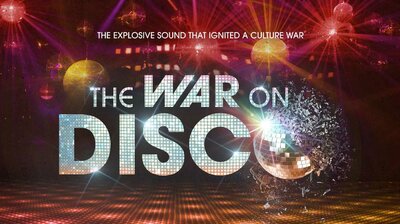
The War on Disco explores the culture war that erupted over the spectacular rise of disco music. Originating in underground Black and gay clubs, disco had unseated rock as America's most popular music by the late 1970s. But many diehard rock fans viewed disco, with its repetitive beat and culture that emphasized pleasure, as shallow and superficial. A story that's about much more than music, The War on Disco explores how the powerful anti-disco backlash revealed a cultural divide that to some seemed to be driven by racism and homophobia. The hostility came to a head on July 12, 1979, when a riot broke out at "Disco Demolition Night" during a baseball game in Chicago.
- 06
For nearly 50 years, biophysicist and inventor Mária Telkes applied her prodigious intellect to harnessing the sun's power. She designed and built the first successfully solar-powered house in 1949 but was perplexed by the knotty scientific challenge of developing a reliable and economical way to store captured solar energy. Telkes held more than 20 patents at the time of her death in 1995.
- 07
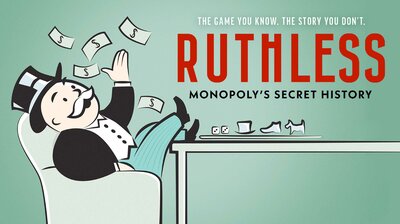
Ruthless: Monopoly's Secret History
For generations, Monopoly has been America's favorite board game, a love letter to unbridled capitalism and — for better or worse — the impulses that make our free-market society tick. But behind the myth of the game's creation is an untold tale of theft, obsession, and corporate double-dealing. Contrary to the folksy legend spread by Parker Brothers, Monopoly's secret history is a surprising saga that features a radical feminist, a community of Quakers in Atlantic City, America's greatest game company, and an unemployed Depression-era engineer. And the real story behind the creation of the game might never have come to light if it weren't for the determination of an economics professor and impassioned anti-monopolist.Part detective story, part sharp social commentary, and part pop-culture celebration, Ruthless: Monopoly's Secret History presents the fascinating true story behind America's favorite game.
- 08
Kissinger: Part One – The Necessity of Power
Kissinger begins with the devastating childhood experiences that helped forge Henry Kissinger's political philosophy. In August 1938, after Hitler's government had embarked on a campaign to destroy Germany's Jews, Kissinger's family fled to the United States. Their escape came two months before Kristallnacht and the outbreak of violence that would culminate in the murder of six million Jews (and millions of others), including 13 members of Kissinger's extended family, implanting in Kissinger the durable conviction that power was the prerequisite for liberty. As a refugee in New York City, Kissinger worked his way up from a job at a shaving brush factory to a stint as an intelligence officer in the U.S. Army ferreting out Nazis in post-war Germany. He returned to earn an advanced degree and professorship at Harvard in government, marking the start of a dazzling career. He became an expert on nuclear weapons policy, eventually securing a position as National Security Advisor for President Richard Nixon at the height of the Cold War. He was an unlikely pick — an awkward academic with a thick accent who hired a staff of ideologically diverse young men, including film interviewees Anthony Lake, Winston Lord, Roger Morris, and Morton Halperin. Bedeviled by how to end the increasingly unpopular war in Vietnam, the Nixon administration turned to increasingly audacious interventions to force Hanoi to the bargaining table, first secretly bombing, then invading neighboring Cambodia. Pundits debated whether these escalations were brilliant strokes of tactical genius or unconstitutional attacks on a neutral nation. Several Kissinger staffers resigned, and protests erupted across America. Public morale reached a bloody nadir on May 4, 1970, with the shooting of antiwar demonstrators at Kent State.
- 09
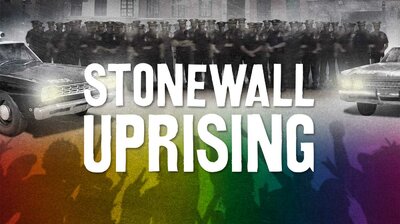
When police raided the Stonewall Inn, a popular gay bar in the Greenwich Village section of New York City on June 28, 1969, the street erupted into violent protests that lasted for the next six days. The Stonewall riots, as they came to be known, marked a major turning point in the modern gay civil rights movement in the United States and around the world.
- 10
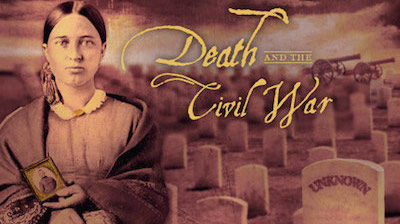
Chart the political and social changes wrought by the pervasiveness and fear of death during the Civil War.
- 11
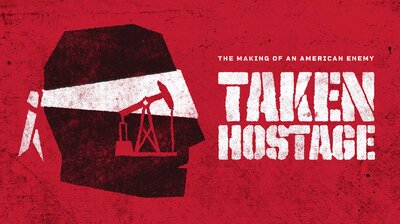
Taken Hostage: The Making of an American Enemy, Part 2
Unfolding like a political thriller, Taken Hostage tells the story of the Iran hostage crisis, when 52 American diplomats, Marines, and civilians were held hostage at the American Embassy in Tehran on November 4, 1979. For the next 444 days, the world watched as the United States received a daily barrage of humiliation, vitriol, and hatred from a country that had long been one of our closest allies. Told through the candid, personal testimony of those whose lives were upended by the action, the crisis would transform both the U.S. and Iran and forever upend the focus and direction of American foreign policy.The film is told mainly through the lens of the remarkable love story of former hostage Barry Rosen and his wife Barbara, who was suddenly thrust into the public eye as the crisis dragged on. Other key figures are Hilary Brown and Carole Jerome, two pioneering female foreign correspondents who risked their lives to uncover the truth of what was happening in Iran; Gary Sick, a senior member of President Carter's national security team and longtime Iran expert; and Colonel James Q. Roberts, a member of the top-secret American commando unit, who recounts details of the failed attempt to rescue the hostages in a daring Special Forces operation. Taken Hostage uses their candid, personal testimonies to tell the story of these dramatic, history-making events.
- 12
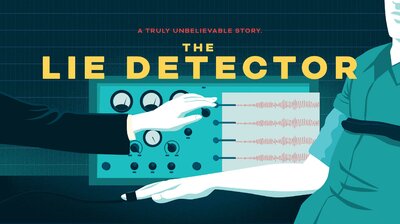
In the first decades of the 20th century, when scientific innovations were transforming life, researchers made a thrilling new claim: they could tell whether someone was lying by using a machine.Popularly known as the "lie detector," the device transformed police work, seized headlines, and was extolled in movies, TV, and comics as an infallible crime-fighting tool. Husbands and wives tested each other's fidelity. Corporations routinely tested employees' honesty, and government workers were tested for loyalty and "morals."But the promise of the polygraph turned dark, and the lie detector too often became an apparatus of fear and intimidation. Written and directed by Rob Rapley and executive produced by Cameo George, The Lie Detectoris a tale of good intentions, twisted morals, and unintended consequences.
- 13
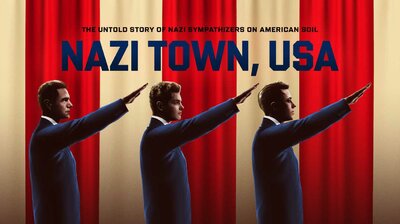
In February 1939, more than 20,000 Americans filled Madison Square Garden for an event billed as a "Pro-American Rally." Images of George Washington hung next to swastikas and speakers railed against the "Jewish controlled media" and called for a return to a racially "pure" America. The keynote speaker was Fritz Kuhn, head of the German American Bund. Nazi Town, USA tells the largely unknown story of the Bund, a 1930s pro-Nazi group which had scores of chapters in suburbs and big cities across the country and represented what many believe was a real threat of fascist subversion in the United States. The Bund held joint rallies with the Ku Klux Klan and ran dozens of summer camps for children centered around Nazi ideology and imagery. Its melding of patriotic values with virulent anti-Semitism raised thorny issues that we continue to wrestle with today.
- 14
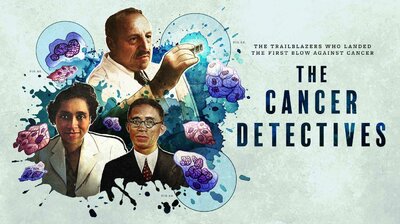
The Trailblazers who landed the first blow against cancer.The story of how the life-saving cervical cancer test became an ordinary part of women's lives is as unusual and remarkable as the coalition of people who ultimately made it possible: a Greek immigrant, Dr. George Papanicolau; his intrepid wife, Mary; Japanese-born artist Hashime Murayama; Dr. Helen Dickens, an African American OBGYN in Philadelphia; and an entirely new class of female scientists known as cyto-screeners. But the test was just the beginning. Once the test proved effective, the campaign to make pap smears available to millions of women required nothing short of a total national mobilization. The Cancer Detectives tells the untold story of the first-ever war on cancer and the people who fought tirelessly to save women from what was once the number one cancer killer of women.
- 15
What happens when the president is unable to serve? The American Vice Presidentexplores the little-known story of the second-highest office in the land, tracing its evolution from a constitutional afterthought to a position of political consequence. Focusing on the fraught period between 1963 and 1974, when a grief-stricken and then scandal-plagued America was forced to define the role of the vice president, the film examines the passage and first uses of the 25th Amendment and offers a fresh and surprising perspective on the process of succession in the executive branch.
- 16
Lyndon Baines Johnson was one of the most astute, effective, and perplexing politicians in modern American history. An "accidental" president but a master legislator, he was determined to "out-Kennedy the Kennedys" by pushing through historic social legislation on a scale that rivaled FDR's New Deal. A Southerner who championed civil rights, LBJ put into motion many of the programs that would continue to shape American life throughout the 1960s and 1970s, a package of reforms known as the "Great Society." But as his authority was undermined by an increasingly unpopular commitment of U.S. forces to Vietnam, his presidency began to unravel. Opposition to the war spurred protest movements and a youthful counterculture. In 1968, he stunned the nation by announcing he would not seek reelection. A larger-than-life figure in his day, LBJ is appreciated for his vast domestic accomplishments, but his presidency continues to be overshadowed by his failure to end the war in Vietnam.
- 17
Lyndon Baines Johnson was one of the most astute, effective, and perplexing politicians in modern American history. An "accidental" president but a master legislator, he was determined to "out-Kennedy the Kennedys" by pushing through historic social legislation on a scale that rivaled FDR's New Deal. A Southerner who championed civil rights, LBJ put into motion many of the programs that would continue to shape American life throughout the 1960s and 1970s, a package of reforms known as the "Great Society." But as his authority was undermined by an increasingly unpopular commitment of U.S. forces to Vietnam, his presidency began to unravel. Opposition to the war spurred protest movements and a youthful counterculture. In 1968, he stunned the nation by announcing he would not seek reelection. A larger-than-life figure in his day, LBJ is appreciated for his vast domestic accomplishments, but his presidency continues to be overshadowed by his failure to end the war in Vietnam.
- 18
Jimmy Carter's story is one of the greatest dramas in American politics. In 1980, he was overwhelmingly voted out of office in a humiliating defeat. Over the subsequent two decades, he became one of the most admired statesmen and humanitarians in America and the world. Through interviews with the people who know him best, Jimmy Carter traces his rapid ascent in politics, dramatic fall from grace, and unexpected resurrection, including Carter family home movies and a rare film sequence of Carter's final hours in the Oval Office, when he and his advisors waited in vain for the release of the Americans who had been held hostage in Tehran for 444 days.Carter was the first president to confront the challenge of militant Islam, then embodied by the Ayatollah Khomeini, leader of the Iranian revolution. Carter was also the first president to embark on what would prove to be the excruciating road to peace in the Middle East. But in the end, his presidency was undone by his failure to secure the hostages' release and by a plummeting economy. Yet the memories of his presidency — gas lines, inflation, recession, the Iran hostage crisis, an ineffectual and fractured administration, and the so-called national malaise — would be eclipsed, finally, by his post-presidential successes as a peacemaker in the world's most troubled areas, and his emergence as a champion for the poor in his own country.
- 19
Test Tube Babies tells the story of doctors, researchers, and hopeful couples who pushed the limits of science and triggered a technological revolution in human reproduction. In so doing, they landed at the center of a controversy whose reverberations continue to this day.
- 20
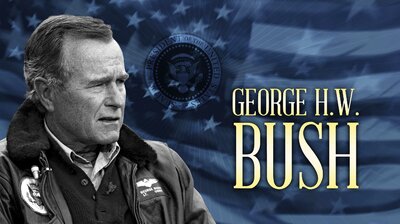
George H.W. Bush: Echoes of the Wise Men
When George. H.W. Bush left the Oval Office in 1992, rejected after one tumultuous presidential term, his 30-year career in public service came to an abrupt and unexpected end. Despite soaring approval ratings following military victory in the Persian Gulf, his years as president after the war were marked by almost unrelieved decline. A sluggish economy and an earlier decision to raise taxes, despite an explicit campaign oath, led to his defeat. By the end of his term, many observers dismissed him as an artifact of an irrelevant Cold War past.George H.W. Bush presents the first in-depth assessment of the 41st president of the United States, drawing upon unparalleled access to figures in Bush's private and public life, to reveal Bush as a pivotal player during a critical moment in American and world history and in a powerful political dynasty. Bush's personal letters, and interviews with his closest advisors and prominent critics inform the film, including First Lady Barbara Bush, Condoleezza Rice, Colin Powell, Mikhail Gorbachev, and more. Part 1 of 2.
- 21
When George. H.W. Bush left the Oval Office in 1992, rejected after one tumultuous presidential term, his 30-year career in public service came to an abrupt and unexpected end. Despite soaring approval ratings following military victory in the Persian Gulf, his years as president after the war were marked by almost unrelieved decline. A sluggish economy and an earlier decision to raise taxes, despite an explicit campaign oath, led to his defeat. By the end of his term, many observers dismissed him as an artifact of an irrelevant Cold War past.George H.W. Bush presents the first in-depth assessment of the 41st president of the United States, drawing upon unparalleled access to figures in Bush's private and public life, to reveal Bush as a pivotal player during a critical moment in American and world history and in a powerful political dynasty. Bush's personal letters, and interviews with his closest advisors and prominent critics inform the film, including First Lady Barbara Bush, Condoleezza Rice, Colin Powell, Mikhail Gorbachev, and more. Part 2 of 2.
- 22
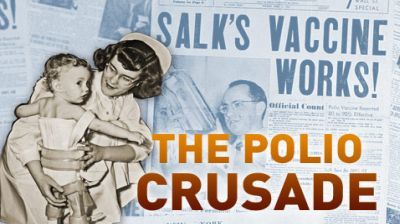
The story of the polio crusade pays tribute to a time when Americans banded together to conquer a terrible disease. The medical breakthrough saved countless lives and had a pervasive impact on American philanthropy that continues to be felt today.
- 23
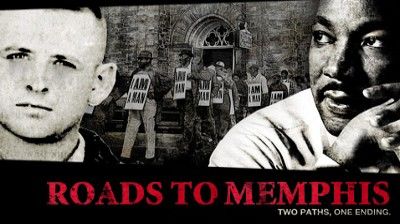
On April 3, 1968, Dr. Martin Luther King spoke to the crowd at the Mason Temple in Memphis, Tennessee, giving one of the most powerful and memorable speeches of his life. In it, he addressed the growing threats against his life, proclaiming, "It doesn't matter with me now. Because I've been to the mountaintop. And I don't mind."The following day, escaped convict James Earl Ray shot and killed King while he lingered on a motel balcony. Roads to Memphis is the fateful narrative of this killer and his prey, set against the seething, turbulent forces in American society. The assassination shocked the country, setting off deadly riots from coast to coast and triggering the largest, costliest, and most ambitious manhunt in American history.Roads to Memphis is told through eyewitness testimony from King's inner circle and the officials involved in Ray's capture and prosecution following an intense two-month international manhunt.
- 24
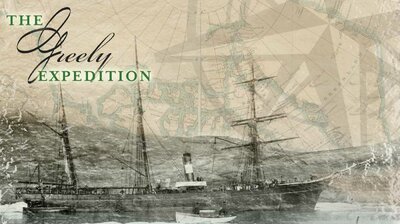
In 1881, 25 men led by Adolphus Greely set sail from Newfoundland to Lady Franklin Bay in the high Arctic, where they planned to collect a wealth of scientific data from a vast area of the world's surface that had been described as a "sheer blank." Three years later, only six survivors returned, with a daunting story of shipwreck, starvation, mutiny, and cannibalism.
- 25
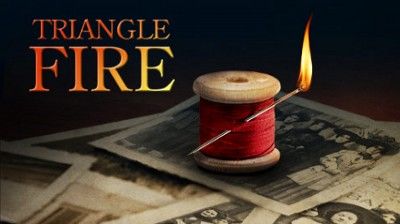
It was the deadliest workplace accident in New York City's history. A dropped match on the 8th floor of the Triangle Shirtwaist Factory sparked a fire that killed over a hundred innocent people trapped inside. The private industry of the American factory would never be the same. The 1911 fire at the Triangle Shirtwaist Factory in New York's Greenwich Village resulted in legislation ensuring the most comprehensive workplace safety laws in the U.S.




Shows like American Experience
The closest matches on shared genres, ranked by match strength and popularity.
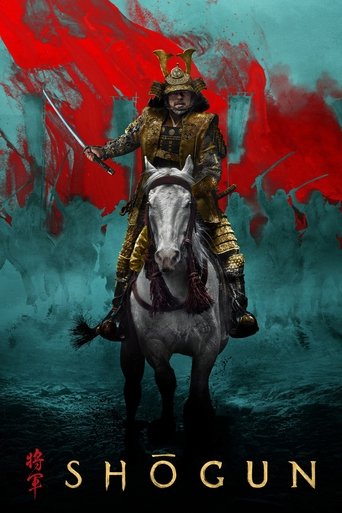
- 01History·Drama·AdventureThe worst episodes of Shōgun2024–present
 Shōgun is set in Japan in the year 1600 at the dawn of a century-defining civil war.
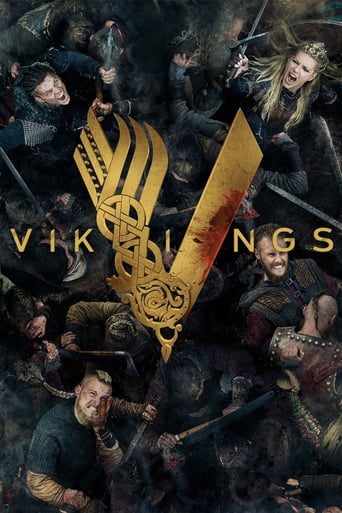
 - 02History·Drama·ActionThe worst episodes of Vikings2013–2021·History
 Vikings transports us to the brutal and mysterious world of Ragnar Lothbrok, a Viking warrior and farmer who yearns to explore - and raid - the distant shores across the ocean.
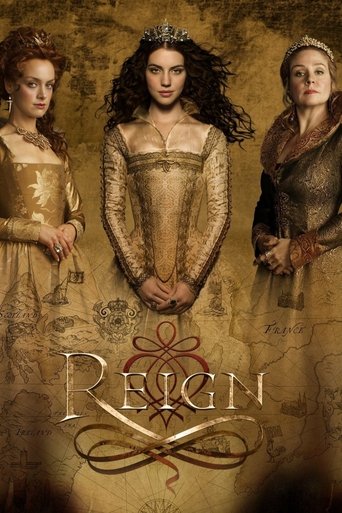
 - 03History·Drama·RomanceThe worst episodes of Reign2013–2017·The CW
 Hidden between the lines of the history books is the story of Mary Stuart, the young woman the world would come to know as Mary, Queen of Scots.
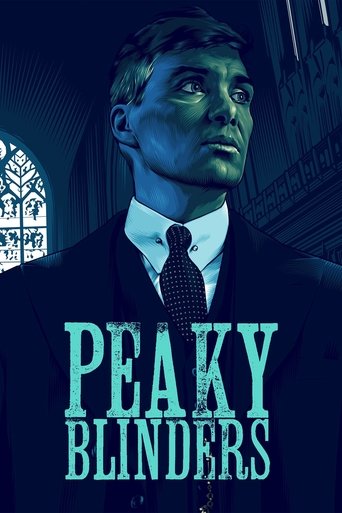
 - 04History·Drama·CrimeThe worst episodes of Peaky Blinders2013–present·BBC OneAn epic gangster drama set in the lawless streets of 1920s Birmingham.
- 05History·Adventure·MysteryThe worst episodes of Expedition Unknown2015–present·Discovery
 In the hit series Expedition Unknown, Travel Channel's witty explorer Josh Gates seeks answers to some of the world's most captivating unsolved stories and legends.
 - 06History·Drama·ActionThe worst episodes of The Last Kingdom2015–2023The Last Kingdom is a show of heroic deeds and epic battles but with a thematic depth that embraces politics, religion, warfare, courage, love, loyalty and our universal search for identity.